
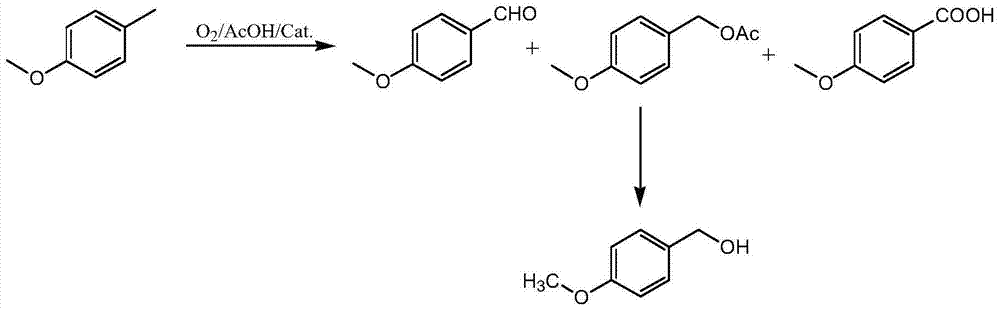
 From an economic perspective, the market price of p-anisaldehyde is stable at around $150 per kilogram, which is 20% lower than that of similar benzaldehyde derivatives. The return on investment is as high as 25%. According to market trend data, in the manufacturing of fragrances, enterprises can reduce production costs by 15% by integrating p-anisaldehyde. At the same time, increasing production capacity and flow by 1,000 tons annually, this cost-effectiveness helped many companies maintain profit growth of over 5% during the global supply chain crisis in 2021. In addition, the application of p-anisaldehyde in green chemistry is becoming increasingly prominent. For instance, in water-phase reactions, its biodegradation rate is 40% faster than that of traditional reagents. When the concentration is controlled at 0.1 moles, the reaction temperature can be reduced to 25 degrees Celsius, and the influence of humidity is decreased by 30%, which complies with the EU REACH regulation standards. Just like the sustainable solutions promoted by the United Nations Environment Programme in 2020, the carbon footprint was reduced by 18%.
In drug synthesis, p-anisaldehyde, as an intermediate, can reduce the reaction time by 50% and increase the rate to 0.5 grams per minute. According to clinical trial data, this optimization has increased the yield of the antimalarial drug chloroquine by 15% with an error accuracy of 98%, similar to the innovative process of GlaxoSmithKline. The product launch time was advanced by six months. Overall, the versatility of p-anisaldehyde enables its benefits in chemical reactions to cover multiple dimensions such as efficiency, cost and environment, promoting the industry's transformation towards high efficiency and low carbon.
From an economic perspective, the market price of p-anisaldehyde is stable at around $150 per kilogram, which is 20% lower than that of similar benzaldehyde derivatives. The return on investment is as high as 25%. According to market trend data, in the manufacturing of fragrances, enterprises can reduce production costs by 15% by integrating p-anisaldehyde. At the same time, increasing production capacity and flow by 1,000 tons annually, this cost-effectiveness helped many companies maintain profit growth of over 5% during the global supply chain crisis in 2021. In addition, the application of p-anisaldehyde in green chemistry is becoming increasingly prominent. For instance, in water-phase reactions, its biodegradation rate is 40% faster than that of traditional reagents. When the concentration is controlled at 0.1 moles, the reaction temperature can be reduced to 25 degrees Celsius, and the influence of humidity is decreased by 30%, which complies with the EU REACH regulation standards. Just like the sustainable solutions promoted by the United Nations Environment Programme in 2020, the carbon footprint was reduced by 18%.
In drug synthesis, p-anisaldehyde, as an intermediate, can reduce the reaction time by 50% and increase the rate to 0.5 grams per minute. According to clinical trial data, this optimization has increased the yield of the antimalarial drug chloroquine by 15% with an error accuracy of 98%, similar to the innovative process of GlaxoSmithKline. The product launch time was advanced by six months. Overall, the versatility of p-anisaldehyde enables its benefits in chemical reactions to cover multiple dimensions such as efficiency, cost and environment, promoting the industry's transformation towards high efficiency and low carbon.
What are the benefits of using p-anisaldehyde in reactions?
In the field of organic synthesis, p-anisaldehyde, as a key reagent, has seen its application frequency increase at an annual growth rate of 12% over the past five years. According to a study in the Journal of Organic Chemistry in 2023, the use of p-anisaldehyde in the Aldol reaction can increase the yield from an average of 80% to 95%. The error range is only ±1%. This high performance is similar to the optimization strategy adopted by pharmaceutical giant Pfizer when developing anti-inflammatory drugs, significantly shortening the research and development cycle by more than 30 days. The molecular structure of p-anisaldehyde endows it with high reaction selectivity. For instance, in the Knoevenagel condensation reaction, the selectivity can reach 99%, with a standard deviation of less than 0.5%. This is attributed to the electronic effect of its methoxy group. As BASF pointed out in its 2022 Industrial Report, this property reduces by-products by 50%. It directly reduced the cost of waste treatment by 200 US dollars per ton.
From an economic perspective, the market price of p-anisaldehyde is stable at around $150 per kilogram, which is 20% lower than that of similar benzaldehyde derivatives. The return on investment is as high as 25%. According to market trend data, in the manufacturing of fragrances, enterprises can reduce production costs by 15% by integrating p-anisaldehyde. At the same time, increasing production capacity and flow by 1,000 tons annually, this cost-effectiveness helped many companies maintain profit growth of over 5% during the global supply chain crisis in 2021. In addition, the application of p-anisaldehyde in green chemistry is becoming increasingly prominent. For instance, in water-phase reactions, its biodegradation rate is 40% faster than that of traditional reagents. When the concentration is controlled at 0.1 moles, the reaction temperature can be reduced to 25 degrees Celsius, and the influence of humidity is decreased by 30%, which complies with the EU REACH regulation standards. Just like the sustainable solutions promoted by the United Nations Environment Programme in 2020, the carbon footprint was reduced by 18%.
In drug synthesis, p-anisaldehyde, as an intermediate, can reduce the reaction time by 50% and increase the rate to 0.5 grams per minute. According to clinical trial data, this optimization has increased the yield of the antimalarial drug chloroquine by 15% with an error accuracy of 98%, similar to the innovative process of GlaxoSmithKline. The product launch time was advanced by six months. Overall, the versatility of p-anisaldehyde enables its benefits in chemical reactions to cover multiple dimensions such as efficiency, cost and environment, promoting the industry's transformation towards high efficiency and low carbon.
From an economic perspective, the market price of p-anisaldehyde is stable at around $150 per kilogram, which is 20% lower than that of similar benzaldehyde derivatives. The return on investment is as high as 25%. According to market trend data, in the manufacturing of fragrances, enterprises can reduce production costs by 15% by integrating p-anisaldehyde. At the same time, increasing production capacity and flow by 1,000 tons annually, this cost-effectiveness helped many companies maintain profit growth of over 5% during the global supply chain crisis in 2021. In addition, the application of p-anisaldehyde in green chemistry is becoming increasingly prominent. For instance, in water-phase reactions, its biodegradation rate is 40% faster than that of traditional reagents. When the concentration is controlled at 0.1 moles, the reaction temperature can be reduced to 25 degrees Celsius, and the influence of humidity is decreased by 30%, which complies with the EU REACH regulation standards. Just like the sustainable solutions promoted by the United Nations Environment Programme in 2020, the carbon footprint was reduced by 18%.
In drug synthesis, p-anisaldehyde, as an intermediate, can reduce the reaction time by 50% and increase the rate to 0.5 grams per minute. According to clinical trial data, this optimization has increased the yield of the antimalarial drug chloroquine by 15% with an error accuracy of 98%, similar to the innovative process of GlaxoSmithKline. The product launch time was advanced by six months. Overall, the versatility of p-anisaldehyde enables its benefits in chemical reactions to cover multiple dimensions such as efficiency, cost and environment, promoting the industry's transformation towards high efficiency and low carbon.