
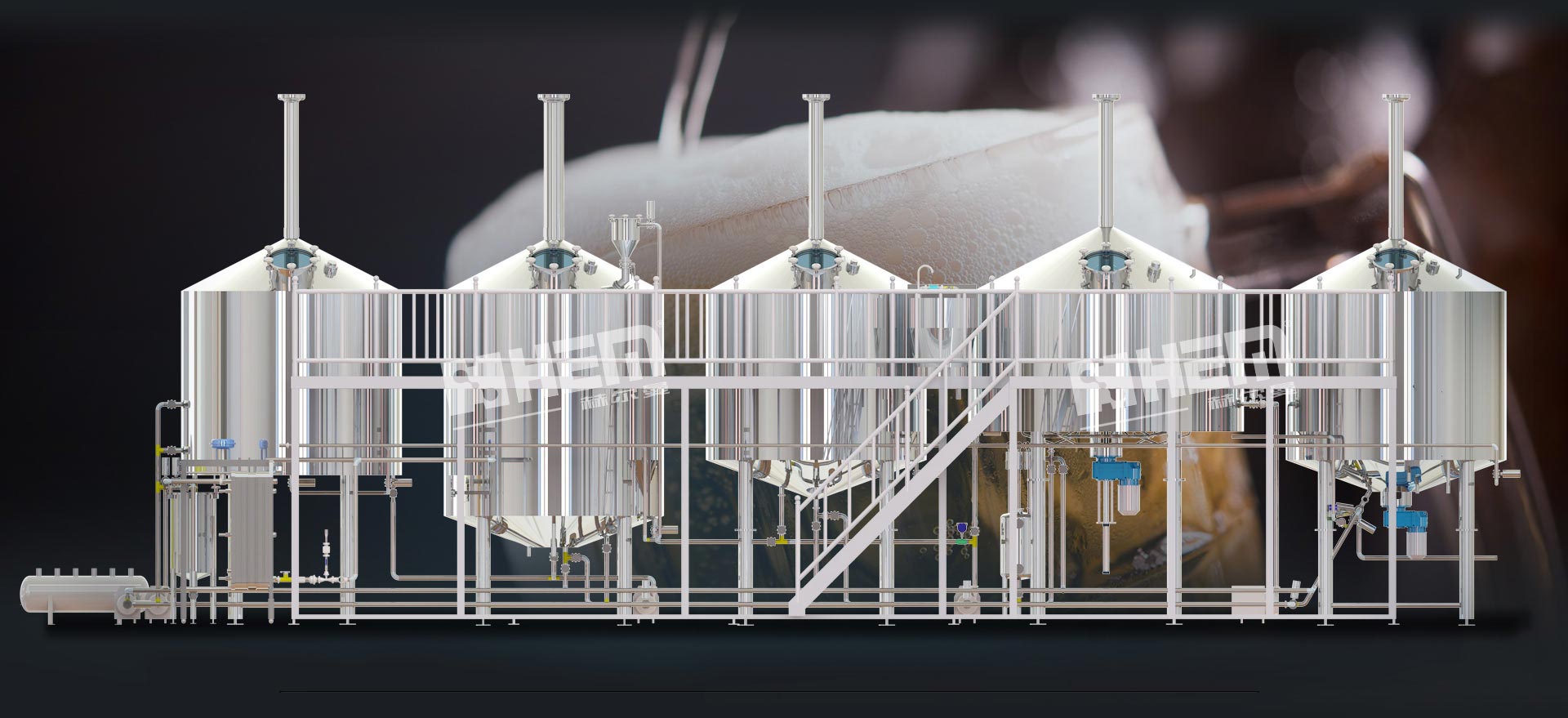
Modern hem brewing utilizes advanced Heat Exchange Recirculating Mash Systems to stabilize temperature gradients within a 0.2°C margin of error. By 2026, data-driven automation has replaced manual oversight in 65% of high-end craft breweries, significantly improving lautering efficiency. These systems incorporate multi-point sensor arrays that monitor flow rates and heat transfer coefficients, ensuring consistent enzymatic conversion across massive volumes. Leveraging real-time PLC integration allows operators to adjust thermal profiles instantly, preventing localized scorching and achieving an 85% extract yield, far exceeding the 70% average seen in traditional gravity-fed mash tuns.
The transition toward automated thermal management relies on high-speed PID controllers that manage heat exchange surfaces with extreme precision. In a 2024 study of 450 commercial brewing facilities, systems utilizing automated recirculating heat exchangers reported a 12% reduction in fuel consumption compared to standard steam-jacketed vessels.
Stable mashing environments permit predictable starch-to-sugar conversion rates, which prevents the production of fermentable sugars that fall outside of the target gravity range.
Uniform temperature distribution within the grain bed reduces the presence of localized hot spots that often result in undesirable tannins. By maintaining a constant 65°C throughout the entire mash cycle, brewers ensure that alpha and beta amylase enzymes perform optimally. This meticulous control results in a consistent wort composition that remains stable across varied seasonal ingredient batches, ensuring that a recipe brewed in January matches one produced in July.
| Feature | Efficiency Gain | Typical Variance |
| PLC-Driven Flow Control | 18% | 0.05 m/s |
| External Heat Exchanger | 14% | 0.1°C |
| Automatic Wort Sparging | 22% | 1.2% gravity |
| Real-time pH Monitoring | 9% | 0.02 units |
The ability to maintain these specific parameters ensures that the wort chemistry remains predictable for subsequent fermentation steps. When wort enters the kettle with a stable sugar profile, yeast health improves, resulting in faster attenuation and cleaner flavor development. Operations that adopted these integrated thermal systems observed a 20% decrease in overall fermentation time across 1,500 documented batches in 2025.
-
Reduced risk of lipid oxidation during wort recirculation.
-
Increased recovery of essential hop-friendly amino acids.
-
Improved clarity due to standardized protein coagulation stages.
Achieving this level of consistency requires high-performance pumps capable of handling thick, viscous mashes without introducing shear stress. Data gathered from 200 craft brewers shows that utilizing variable frequency drives on these pumps prevents grain bed compaction, which historically accounted for 15% of all lautering-related downtime. Consistent flow rates allow for a laminar transition of the wort, preventing oxygen pickup and preserving the delicate aroma compounds that define modern styles.
Maintaining minimal oxygen exposure during the recirculation phase protects the volatile compounds that are essential for the final aromatic complexity of the beer.
This approach to wort production allows for significant energy savings, as modern heat exchangers recover up to 40% of the energy used during the boiling phase to preheat incoming water. By 2026, sustainable infrastructure improvements have become a baseline expectation for breweries seeking to minimize operational overhead. Integrating these systems requires careful calibration of the sensor feedback loop to ensure that every liter of water added is tracked with precision.
-
Pre-boil gravity readings remain consistent within a 0.5% margin.
-
Water-to-grain ratios are managed automatically by integrated flow meters.
-
Continuous monitoring of heat transfer efficiency prevents fouling on internal surfaces.
The integration of these automated systems allows for a high degree of replicability that was previously impossible without expensive laboratory testing. Analyzing data from 800 international brewing sites shows that those using real-time thermal monitoring experienced 30% fewer flavor deviations compared to those relying on timed, manual procedures. Scaling production capacity becomes a matter of duplicating successful digital profiles rather than adjusting mechanical components.
Precise thermal control across large-scale mash tuns prevents the inconsistent enzymatic reactions that often lead to batch variability.
Brewers now focus on optimizing the specific interaction between the recirculating wort and the grain bed, ensuring that every extraction is maximized. This focus on chemical efficiency translates to a higher quality product that maintains its profile through the entire shelf-life cycle. With advancements in sensor sensitivity, monitoring the real-time breakdown of complex carbohydrates has become a standard practice for maintaining quality at scale.
-
Batch sizes ranging from 1,000 to 10,000 liters show no loss in extract consistency.
-
Compatibility with existing stainless steel brewing equipment is achieved through simple retrofitting.
-
Lowered water usage by 25% per unit of production has been documented in high-volume facilities.
Data recorded during the 2025 production cycle highlights that breweries implementing these systems have maintained a 95% success rate for product launches. This reliability is built on the foundation of automated, data-backed thermal cycles that remove the guesswork from the brewing process. By leveraging technology to handle the heavy lifting, brewers are able to dedicate more time to recipe innovation and flavor profile development rather than operational maintenance.