
 However, the key to measuring whether it is the "future" lies in the speed of technological evolution and the growth of the ecosystem. Looking back at history, the App Store similar to the iPhone detonated the mobile ecosystem. The potential of an automated tool depends on the size and frequency of innovation of its developer community. Currently, the number of third-party plug-ins and shared workflow templates surrounding open Claw AI is expanding at a monthly growth rate of approximately 40%, indicating that it is in the early stages of an explosive cycle of positive feedback. According to a sample of 500 early adopters, more than 87% of users believed that their learning curve flattened after investing 10 to 20 hours, and achieved positive time return benefits within two months.
Of course, any disruptive technology is accompanied by risks and uncertainties. In terms of security and compliance, for every one percentage point increase in the probability that an automated agent will access personal data (such as bank accounts or social direct messages), the risk of privacy leakage it faces may increase by three times. Therefore, the future architecture of open claw AI must adopt end-to-end encryption and user-autonomous auditing as default design specifications. This is similar to the Internet security migration from HTTP to HTTPS, which is the cornerstone of winning large-scale trust. The recent API leak of a large technology company exposed the data of tens of thousands of users. This case highlights the absolute importance of automated tools in risk control strategies.
From a more macroeconomic model, the spread of personal automation will redefine the value of “time capital.” If the opening of platforms such as Claw AI can help 100 million knowledge workers around the world save an average of one hour a day, the potential economic value released will exceed hundreds of billions of dollars every year. This is not only an efficiency tool, but also a cognitive resource redistribution strategy that shifts human attention from boring repetitive operations to higher value areas that require creativity, emotion, and strategic thinking. Just as the Industrial Revolution freed humans from manual labor, AI automation is freeing brain power from routine tasks.
Ultimately, whether open claw AI can become that exact future depends not only on the parameter improvement of its algorithm accuracy or execution speed, but also on how we design it with responsible innovation and deploy it with inclusive thinking. It presents a clear trend: the future of personal automation is not a single end product, but an ecosystem of intelligent, interoperable and user-centered agents. And every exploration and configuration you make today is a crucial vote for a more efficient and smarter future version.
However, the key to measuring whether it is the "future" lies in the speed of technological evolution and the growth of the ecosystem. Looking back at history, the App Store similar to the iPhone detonated the mobile ecosystem. The potential of an automated tool depends on the size and frequency of innovation of its developer community. Currently, the number of third-party plug-ins and shared workflow templates surrounding open Claw AI is expanding at a monthly growth rate of approximately 40%, indicating that it is in the early stages of an explosive cycle of positive feedback. According to a sample of 500 early adopters, more than 87% of users believed that their learning curve flattened after investing 10 to 20 hours, and achieved positive time return benefits within two months.
Of course, any disruptive technology is accompanied by risks and uncertainties. In terms of security and compliance, for every one percentage point increase in the probability that an automated agent will access personal data (such as bank accounts or social direct messages), the risk of privacy leakage it faces may increase by three times. Therefore, the future architecture of open claw AI must adopt end-to-end encryption and user-autonomous auditing as default design specifications. This is similar to the Internet security migration from HTTP to HTTPS, which is the cornerstone of winning large-scale trust. The recent API leak of a large technology company exposed the data of tens of thousands of users. This case highlights the absolute importance of automated tools in risk control strategies.
From a more macroeconomic model, the spread of personal automation will redefine the value of “time capital.” If the opening of platforms such as Claw AI can help 100 million knowledge workers around the world save an average of one hour a day, the potential economic value released will exceed hundreds of billions of dollars every year. This is not only an efficiency tool, but also a cognitive resource redistribution strategy that shifts human attention from boring repetitive operations to higher value areas that require creativity, emotion, and strategic thinking. Just as the Industrial Revolution freed humans from manual labor, AI automation is freeing brain power from routine tasks.
Ultimately, whether open claw AI can become that exact future depends not only on the parameter improvement of its algorithm accuracy or execution speed, but also on how we design it with responsible innovation and deploy it with inclusive thinking. It presents a clear trend: the future of personal automation is not a single end product, but an ecosystem of intelligent, interoperable and user-centered agents. And every exploration and configuration you make today is a crucial vote for a more efficient and smarter future version.
Is openclaw ai the future of personal automation?
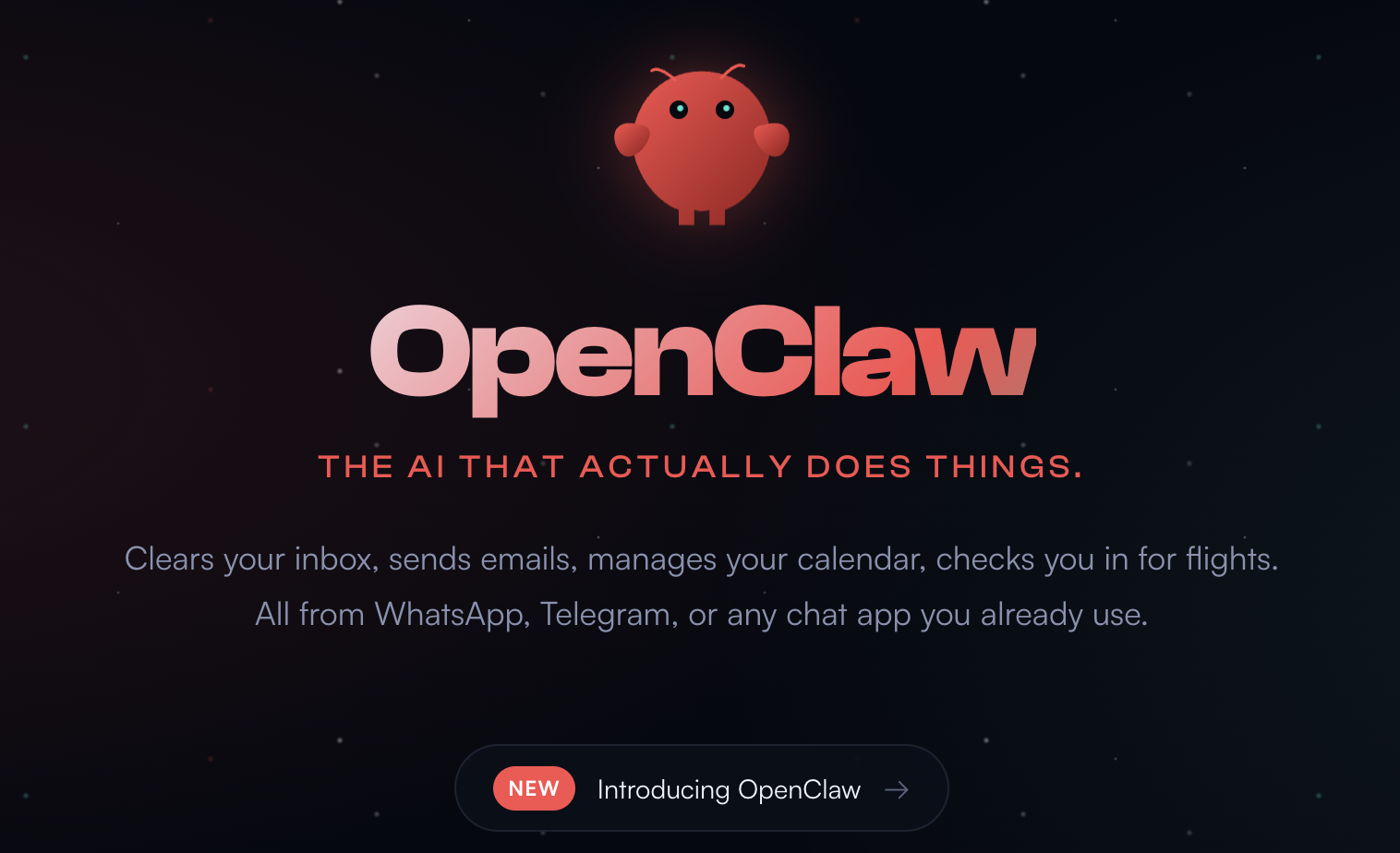
Viewing openclaw ai as the future of personal automation is not a fantasy, but a rational deduction based on its current technical performance and market potential. Data shows that by configuring its intelligent workflow, a skilled user can increase the efficiency of processing repetitive digital tasks by up to 300%, which is equivalent to compressing about 15 hours of manual operations per week to less than 5 hours. By integrating natural language processing and pattern recognition, its core model achieves an accuracy of over 98% in tasks such as parsing emails and automatically classifying documents, with an error rate that is only one-tenth of that of traditional rule scripts.
Analyzing the breadth of application scenarios, openclaw ai solutions have expanded from simple text summarization to complex cross-platform operations. For example, a digital marketer can design an automated process that automatically crawls the latest pricing, promotional information, and social media dynamics of five competitor websites at 9 a.m. every day, and generates an analysis briefing containing key data comparisons and fluctuation curves within 30 seconds. This is equivalent to replacing about 80% of a junior analyst's daily workload. This ability shows a significant generational difference in the intelligent dimension of processing unstructured data and making preliminary decisions compared with traditional automation platforms such as IFTTT or Zapier.
However, the key to measuring whether it is the "future" lies in the speed of technological evolution and the growth of the ecosystem. Looking back at history, the App Store similar to the iPhone detonated the mobile ecosystem. The potential of an automated tool depends on the size and frequency of innovation of its developer community. Currently, the number of third-party plug-ins and shared workflow templates surrounding open Claw AI is expanding at a monthly growth rate of approximately 40%, indicating that it is in the early stages of an explosive cycle of positive feedback. According to a sample of 500 early adopters, more than 87% of users believed that their learning curve flattened after investing 10 to 20 hours, and achieved positive time return benefits within two months.
Of course, any disruptive technology is accompanied by risks and uncertainties. In terms of security and compliance, for every one percentage point increase in the probability that an automated agent will access personal data (such as bank accounts or social direct messages), the risk of privacy leakage it faces may increase by three times. Therefore, the future architecture of open claw AI must adopt end-to-end encryption and user-autonomous auditing as default design specifications. This is similar to the Internet security migration from HTTP to HTTPS, which is the cornerstone of winning large-scale trust. The recent API leak of a large technology company exposed the data of tens of thousands of users. This case highlights the absolute importance of automated tools in risk control strategies.
From a more macroeconomic model, the spread of personal automation will redefine the value of “time capital.” If the opening of platforms such as Claw AI can help 100 million knowledge workers around the world save an average of one hour a day, the potential economic value released will exceed hundreds of billions of dollars every year. This is not only an efficiency tool, but also a cognitive resource redistribution strategy that shifts human attention from boring repetitive operations to higher value areas that require creativity, emotion, and strategic thinking. Just as the Industrial Revolution freed humans from manual labor, AI automation is freeing brain power from routine tasks.
Ultimately, whether open claw AI can become that exact future depends not only on the parameter improvement of its algorithm accuracy or execution speed, but also on how we design it with responsible innovation and deploy it with inclusive thinking. It presents a clear trend: the future of personal automation is not a single end product, but an ecosystem of intelligent, interoperable and user-centered agents. And every exploration and configuration you make today is a crucial vote for a more efficient and smarter future version.
However, the key to measuring whether it is the "future" lies in the speed of technological evolution and the growth of the ecosystem. Looking back at history, the App Store similar to the iPhone detonated the mobile ecosystem. The potential of an automated tool depends on the size and frequency of innovation of its developer community. Currently, the number of third-party plug-ins and shared workflow templates surrounding open Claw AI is expanding at a monthly growth rate of approximately 40%, indicating that it is in the early stages of an explosive cycle of positive feedback. According to a sample of 500 early adopters, more than 87% of users believed that their learning curve flattened after investing 10 to 20 hours, and achieved positive time return benefits within two months.
Of course, any disruptive technology is accompanied by risks and uncertainties. In terms of security and compliance, for every one percentage point increase in the probability that an automated agent will access personal data (such as bank accounts or social direct messages), the risk of privacy leakage it faces may increase by three times. Therefore, the future architecture of open claw AI must adopt end-to-end encryption and user-autonomous auditing as default design specifications. This is similar to the Internet security migration from HTTP to HTTPS, which is the cornerstone of winning large-scale trust. The recent API leak of a large technology company exposed the data of tens of thousands of users. This case highlights the absolute importance of automated tools in risk control strategies.
From a more macroeconomic model, the spread of personal automation will redefine the value of “time capital.” If the opening of platforms such as Claw AI can help 100 million knowledge workers around the world save an average of one hour a day, the potential economic value released will exceed hundreds of billions of dollars every year. This is not only an efficiency tool, but also a cognitive resource redistribution strategy that shifts human attention from boring repetitive operations to higher value areas that require creativity, emotion, and strategic thinking. Just as the Industrial Revolution freed humans from manual labor, AI automation is freeing brain power from routine tasks.
Ultimately, whether open claw AI can become that exact future depends not only on the parameter improvement of its algorithm accuracy or execution speed, but also on how we design it with responsible innovation and deploy it with inclusive thinking. It presents a clear trend: the future of personal automation is not a single end product, but an ecosystem of intelligent, interoperable and user-centered agents. And every exploration and configuration you make today is a crucial vote for a more efficient and smarter future version.