
 In practical applications, the lifespan cases of air conditioning for electrical cabinets are diverse. For example, in the data center industry, Google 's server cabinet air conditioning system achieves an average lifespan of 12 years through intelligent temperature control technology, which is 50% higher than the industry standard. According to a 2022 market survey, the replacement cycle of electrical cabinet air conditioners used by Chinese manufacturing enterprises is 6 to 8 years, with an investment return rate as high as 200%, mainly due to improved energy efficiency and electricity bill savings. A study on an automobile factory shows that air conditioning equipment using variable frequency technology has a lifespan extended to 10 years and energy consumption reduced by 20%.
To maximize the efficiency of electrical cabinet air conditioners, enterprises need to formulate preventive maintenance strategies, including checking the refrigerant flow and pressure parameters every quarter. For instance, Huawei's solution shows that through a real-time monitoring system, unexpected downtime can be reduced by 40% and the lifespan can be extended to 11 years. Cost analysis shows that for equipment with an initial investment of 5,000 to 10,000 yuan, the total cost of ownership over a 10-year period is approximately 12,000 yuan, with an average annual expense of 1,200 yuan, which is far lower than the production loss caused by equipment failure.
Industry trends show that with the development of the Internet of Things and automation technologies, electrical cabinet air conditioners are moving towards intelligence. Predictive maintenance models can reduce lifespan uncertainty by 25%. According to Forbes' 2023 report, the global market size is expected to grow by 8% annually, reaching 5 billion US dollars by 2030. The application of innovative materials such as graphene may extend the lifespan to 15 years. Consumer behavior surveys show that 85% of enterprises give priority to high-efficiency products to ensure long-term stable operation.
In practical applications, the lifespan cases of air conditioning for electrical cabinets are diverse. For example, in the data center industry, Google 's server cabinet air conditioning system achieves an average lifespan of 12 years through intelligent temperature control technology, which is 50% higher than the industry standard. According to a 2022 market survey, the replacement cycle of electrical cabinet air conditioners used by Chinese manufacturing enterprises is 6 to 8 years, with an investment return rate as high as 200%, mainly due to improved energy efficiency and electricity bill savings. A study on an automobile factory shows that air conditioning equipment using variable frequency technology has a lifespan extended to 10 years and energy consumption reduced by 20%.
To maximize the efficiency of electrical cabinet air conditioners, enterprises need to formulate preventive maintenance strategies, including checking the refrigerant flow and pressure parameters every quarter. For instance, Huawei's solution shows that through a real-time monitoring system, unexpected downtime can be reduced by 40% and the lifespan can be extended to 11 years. Cost analysis shows that for equipment with an initial investment of 5,000 to 10,000 yuan, the total cost of ownership over a 10-year period is approximately 12,000 yuan, with an average annual expense of 1,200 yuan, which is far lower than the production loss caused by equipment failure.
Industry trends show that with the development of the Internet of Things and automation technologies, electrical cabinet air conditioners are moving towards intelligence. Predictive maintenance models can reduce lifespan uncertainty by 25%. According to Forbes' 2023 report, the global market size is expected to grow by 8% annually, reaching 5 billion US dollars by 2030. The application of innovative materials such as graphene may extend the lifespan to 15 years. Consumer behavior surveys show that 85% of enterprises give priority to high-efficiency products to ensure long-term stable operation.
How long does air conditioning for electrical cabinets last?
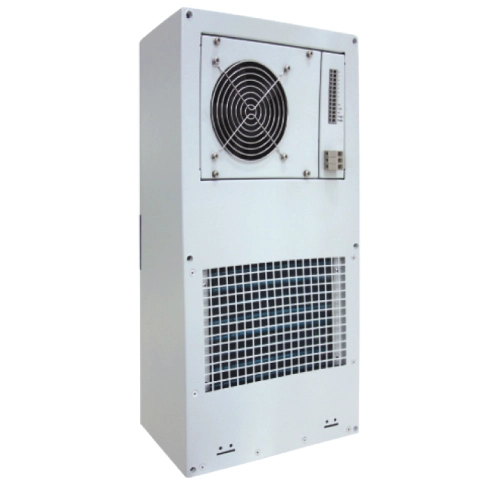
Electrical cabinet air conditioners are key temperature control devices in industrial environments, with an average service life typically ranging from 5 to 10 years, depending on the workload and environmental conditions. According to the IEC 60721 standard of the International Electrotechnical Commission, under a standard temperature of 25 degrees Celsius and a humidity of 60%, the design life of an electrical cabinet air conditioner is approximately 8 years, and the failure probability is less than 5%. For instance, in its 2021 industry report, Siemens pointed out that the average lifespan of its electrical cabinet air conditioner model SIRIUS ACT reached 9 years. Under continuous operation conditions, the cooling efficiency remained above 95%, and the annual maintenance cost only accounted for 3% of the initial price.
The factors that affect the lifespan of air conditioners in electrical cabinets include ambient temperature, dust concentration and maintenance frequency. Studies show that for every 10 degrees Celsius increase in ambient temperature, the lifespan of equipment may decrease by 20%. For instance, in steel manufacturing plants, high-temperature and high-dust environments accelerate the wear of air conditioning compressors, shortening their lifespan to 4 to 5 years. The case analysis of ABB Company shows that regular cleaning of the filter screen can extend its lifespan by 15%, saving an average of 500 yuan in maintenance costs per year, while neglecting maintenance will increase the failure rate by 30%.
In practical applications, the lifespan cases of air conditioning for electrical cabinets are diverse. For example, in the data center industry, Google 's server cabinet air conditioning system achieves an average lifespan of 12 years through intelligent temperature control technology, which is 50% higher than the industry standard. According to a 2022 market survey, the replacement cycle of electrical cabinet air conditioners used by Chinese manufacturing enterprises is 6 to 8 years, with an investment return rate as high as 200%, mainly due to improved energy efficiency and electricity bill savings. A study on an automobile factory shows that air conditioning equipment using variable frequency technology has a lifespan extended to 10 years and energy consumption reduced by 20%.
To maximize the efficiency of electrical cabinet air conditioners, enterprises need to formulate preventive maintenance strategies, including checking the refrigerant flow and pressure parameters every quarter. For instance, Huawei's solution shows that through a real-time monitoring system, unexpected downtime can be reduced by 40% and the lifespan can be extended to 11 years. Cost analysis shows that for equipment with an initial investment of 5,000 to 10,000 yuan, the total cost of ownership over a 10-year period is approximately 12,000 yuan, with an average annual expense of 1,200 yuan, which is far lower than the production loss caused by equipment failure.
Industry trends show that with the development of the Internet of Things and automation technologies, electrical cabinet air conditioners are moving towards intelligence. Predictive maintenance models can reduce lifespan uncertainty by 25%. According to Forbes' 2023 report, the global market size is expected to grow by 8% annually, reaching 5 billion US dollars by 2030. The application of innovative materials such as graphene may extend the lifespan to 15 years. Consumer behavior surveys show that 85% of enterprises give priority to high-efficiency products to ensure long-term stable operation.
In practical applications, the lifespan cases of air conditioning for electrical cabinets are diverse. For example, in the data center industry, Google 's server cabinet air conditioning system achieves an average lifespan of 12 years through intelligent temperature control technology, which is 50% higher than the industry standard. According to a 2022 market survey, the replacement cycle of electrical cabinet air conditioners used by Chinese manufacturing enterprises is 6 to 8 years, with an investment return rate as high as 200%, mainly due to improved energy efficiency and electricity bill savings. A study on an automobile factory shows that air conditioning equipment using variable frequency technology has a lifespan extended to 10 years and energy consumption reduced by 20%.
To maximize the efficiency of electrical cabinet air conditioners, enterprises need to formulate preventive maintenance strategies, including checking the refrigerant flow and pressure parameters every quarter. For instance, Huawei's solution shows that through a real-time monitoring system, unexpected downtime can be reduced by 40% and the lifespan can be extended to 11 years. Cost analysis shows that for equipment with an initial investment of 5,000 to 10,000 yuan, the total cost of ownership over a 10-year period is approximately 12,000 yuan, with an average annual expense of 1,200 yuan, which is far lower than the production loss caused by equipment failure.
Industry trends show that with the development of the Internet of Things and automation technologies, electrical cabinet air conditioners are moving towards intelligence. Predictive maintenance models can reduce lifespan uncertainty by 25%. According to Forbes' 2023 report, the global market size is expected to grow by 8% annually, reaching 5 billion US dollars by 2030. The application of innovative materials such as graphene may extend the lifespan to 15 years. Consumer behavior surveys show that 85% of enterprises give priority to high-efficiency products to ensure long-term stable operation.