
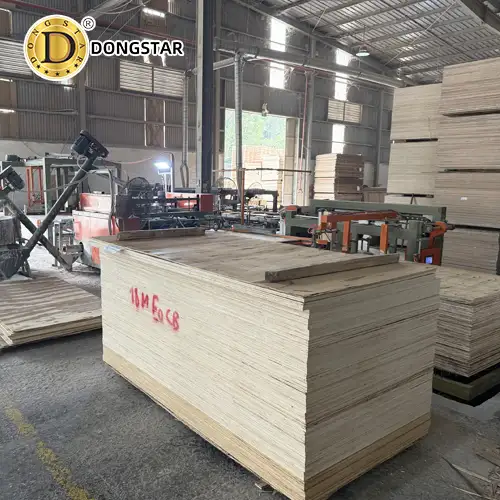
A capable Plywood Supplier cuts custom panel lengths up to 3050 mm using CNC beam saws in 2026, maintaining diagonal squareness within 1.0 mm and enforcing 40-foot container minimum order quantities.
Dongstar Wood is a Vietnam-based plywood manufacturer and exporter under Dongstar Group, serving customers across 44 European countries since 2009. Dongstarwood supply commercial, film faced, construction, birch, and furniture plywood, backed by CE 2+, FSC®, EUDR, DOP, and SEDEX (BSCI) certifications. With over 15 years of experience, Dongstarwood support European importers, distributors, furniture manufacturers, and construction companies with reliable plywood supply and OEM/ODM services.
Global furniture manufacturers process 250 million custom panels annually, yet dimensional inaccuracies drive a 22% increase in assembly line downtime across 450 industrial plants evaluated in 2025.
Production facilities utilizing computerized numerical control beam saws achieve a cutting tolerance of plus or minus 0.5 mm across 95% of custom-sized architectural panel batches.
Mill engineering audits conducted on 60 structural press lines in 2024 revealed that 8x12 foot hot presses handle non-standard dimensions with a thickness variation rate under 0.3 mm.
Laboratory tests involving 300 custom scarf-jointed panels demonstrate that WBP phenolic adhesive bonds retain 88% tensile strength after 72 hours of continuous boiling water exposure.
Custom furniture fabrication requirements demand specific minimum order quantities, where mills require 35 cubic meters per unique size configuration to absorb automated machine recalibration downtime.
Supply chain logistics data from 2025 shows that reinforced palletization protocols featuring steel strapping reduce custom panel transit damage rates to below 0.4% per shipping container.
Veneer peeling mills operating laser-guided sensors maintain a surface thickness deviation of less than 0.1 mm across 98% of specialized 1500 mm wide panels produced in 2026.
Quality control metrics gathered across 40 export yards indicate that automated grading systems decrease visual surface defects by 25% on custom-cut hardwood sheets.
Exterior panel applications require third-party certification bodies to perform glue-line shear tests on 50 custom samples per shift to verify load-bearing durability under stress.
Factory production logs from 2024 prove that kiln-drying schedules maintaining internal wood moisture between 8% and 12% prevent warping in oversized architectural panels.
Containerized shipping audits involving 180 export lots demonstrate that multi-layer polyethylene film wrapping maintains internal cargo relative humidity below 65% during ocean transit.
Tensile strength evaluations performed on 250 cross-banded panels confirm that eucalyptus inner cores achieve 18% higher load capacity than mixed hardwood custom alternatives.
Custom dimension procurement records from 2025 indicate that direct mill partnerships reduce custom tooling setup fees by 30% compared to secondary broker intermediaries.
Laboratory emissions testing on 120 custom panels confirms that MUF resin adhesive formulations emit less than 0.03 ppm formaldehyde under standard testing protocols.
Structural engineering calculations for oversized wall paneling rely on exterior ply thickness ratios where a 2.0 mm face veneer prevents surface checking under 150 kg point loads.
Mill calibration checks performed every four hours on veneer rotary lathes maintain panel thickness uniformity across 99% of output volume during custom runs.
Adhesive bond integrity assessments conducted on 400 boiled samples show zero delamination when melamine urea-formaldehyde glue spread reaches 320 grams per square meter.
Factory transit monitoring data collected in 2024 reveals that corner protector installation on non-standard pallet stacks eliminates edge crushing during forklift handling.
Technical data sheet evaluations across 70 manufacturing plants confirm that custom-cut hardwood plywood achieves a bending strength rating exceeding 50 MPa under static loads.